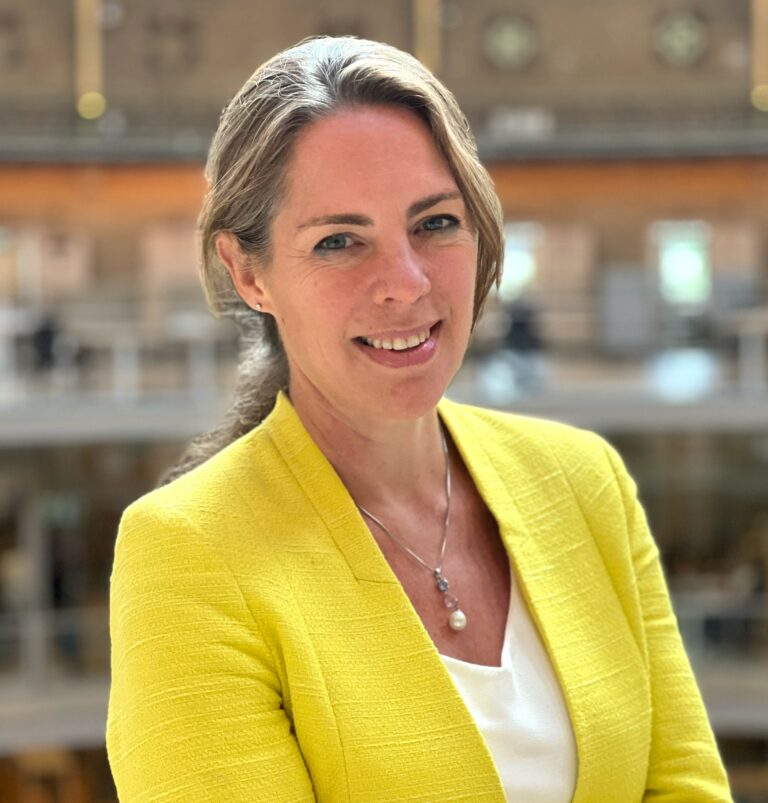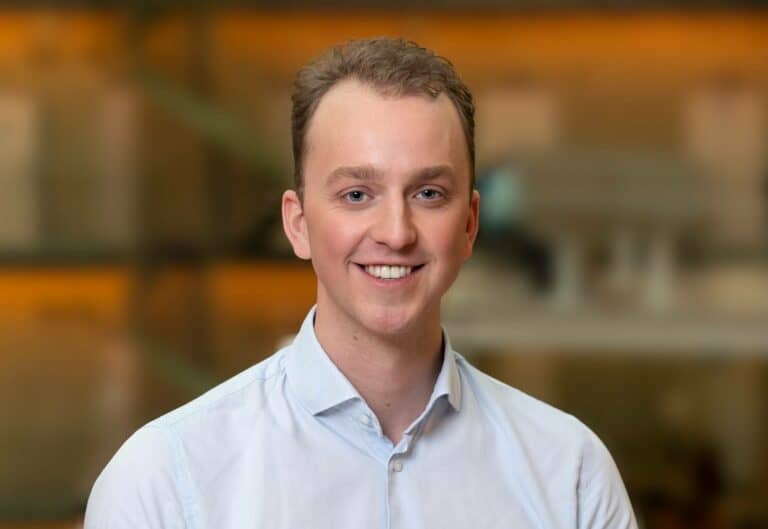
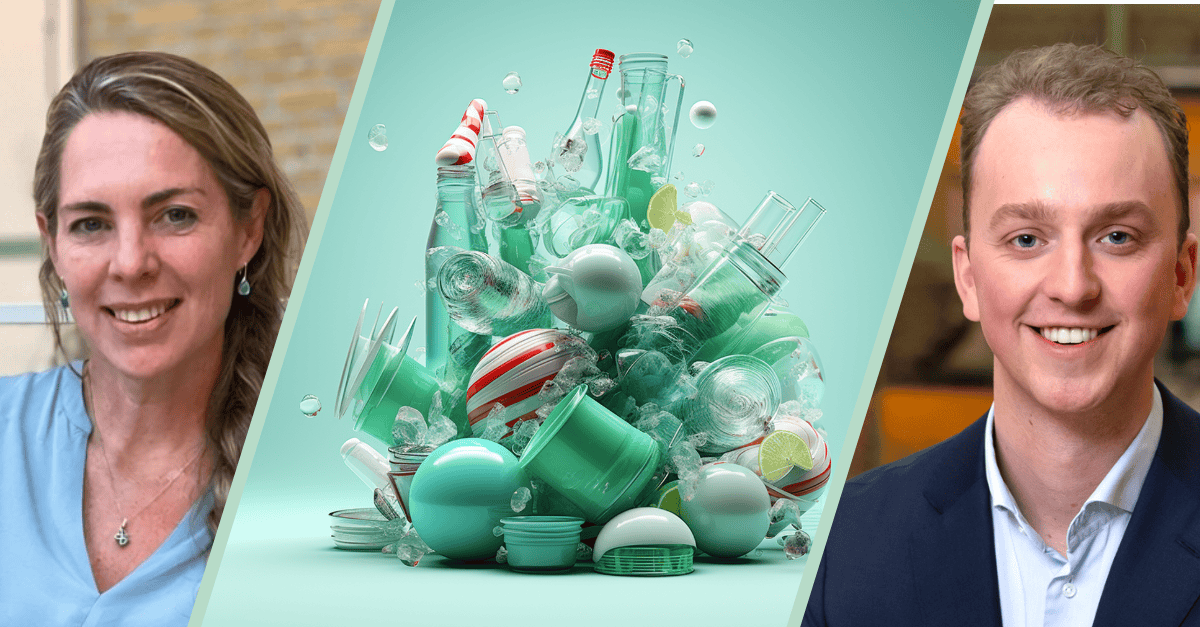
The pioneering circular entrepreneurs of the early days were often driven by a clear mission. For example, they wanted to contribute to less waste or lower CO2 emissions. “In the past, the emphasis was mainly on the ecological necessity,” says Birgitta. “That is still important, but we see that themes such as resource security and independence from international chains have become much more prominent. Due to current international developments, dependence on raw materials from other countries is suddenly high on the agenda. That is what people want to do something about.” According to Max, circularity is increasingly becoming a strategic choice: “When entrepreneurs explain why they do business circularly, you hear less and less often that it is purely about sustainability. It is becoming much more of a commercial and strategic decision. Companies want to keep a grip on their raw materials and be less vulnerable to disruptions in the supply chain.”
From good idea to good business model
The innovative solutions of circular entrepreneurs often start from a societal challenge. Think of developing new production methods for biogas and sustainable raw materials. Or innovations that respond to the growing shortage of skilled tradespeople in construction or the reduction of waste. “The success of this only comes about when that solution genuinely aligns with a concrete customer need,” says Max. “Entrepreneurs have to bridge that gap. Entrepreneurs are often incredibly driven. That is inspiring, but ultimately you have to return to the question: what problem am I solving for my customer? And what price is the customer willing to pay for this in the long term? That is where the core of a healthy business model lies.”
Recycling is getting a new meaning
A development that strikes Birgitta is the renewed focus on recycling. “In the circular economy, the focus was for a long time on repair (upcycling), renting (product-as-a-service models) and extending lifespan. Recycling was sometimes seen as less interesting. Due to geopolitical developments, we are seeing that change. Because of the growing focus on our dependence on critical raw materials, we are seeing that recycling is becoming interesting again. An initiative like Droppie illustrates that. Droplet collects consumer waste through special recycling shops, where consumers receive money for plastic packaging, textiles, cooking fat and oil, electronic equipment and deposit items that they hand in separately. This creates a cleaner and more usable stream of raw materials for reuse.” According to Birgitta, North Holland offers excellent opportunities for this type of innovation. “With our port, the logistics infrastructure and the space available here, we can play an important role in processing and retaining raw materials. That makes the region interesting for entrepreneurs working on new recycling technologies.”
Major impact
ROM InWest focuses specifically on circular construction, green chemistry and critical raw materials within the circular economy because significant impact can be achieved in these areas. Birgitta: “In the construction sector, for example, innovations are emerging that respond to the growing shortage of skilled workers. New technologies make processes more efficient and reduce dependence on scarce personnel. As we see, for example, at DryStack, an innovative way to lay bricks smarter, cleaner and faster. Or HDO Groep, which builds homes faster and more flexibly using industrial timber construction.” Within green chemistry, Birgitta and Max see companies working on new production methods for biogas and sustainable raw materials. Max: “Also companies such as Phoenix Metals, which processes steel slag and can thereby supply raw materials for battery production, demonstrates how circular solutions can contribute to strategic issues regarding the recovery of raw materials from residual streams.”
The appeal of North Holland
That entrepreneurs in North Holland easily find each other is seen by both Birgitta and Max as an important strength of the region. “There are many small ecosystems where entrepreneurs, investors and knowledge institutions meet each other,” says Max. “People run into each other in programmes, workshops and networks. As a result, new collaborations form more quickly.” Birgitta gives a number of examples: “Think of the platform Green Chemistry, New Economy, that the sustainable transition in manufacturing chemistry is accelerating. A lot is happening there around the circular economy, just like within the Amsterdam Economic Board. And we ourselves have a DigiCecosystem developed for the construction sector. That is where companies meet and solve certain problems together. As ROM InWest, we sit in many of those different committees. Due to the multitude of initiatives, some entrepreneurs can't see the wood for the trees. Because we have the overview, we can quickly point entrepreneurs in the right direction.” Max sees many opportunities for North Holland: “The innovation level of this region is high. There is plenty of talent available and many organisations are active that help entrepreneurs take the next step. Furthermore, there are many investors in this region. All of that makes North Holland an attractive place to build a circular business.”
Strong supply chains make a difference
Birgitta sees an important role there for ROM InWest: “A circular entrepreneur is often trying not just to build a business, but to change a complete system. That is a huge task. They have to find suppliers for residual streams, convince partners to join in, and find customers willing to buy their solution. That makes circular innovation more complex than many traditional business models. Precisely for that reason, ROM InWest focuses heavily on connecting parties. By bringing together entrepreneurs, knowledge institutions, buyers and investors, stronger chains are created and the chance of successful scaling grows.” Max says in conclusion: “We always look at the next step an entrepreneur needs to take. What is needed to move forward? That could be funding, but also a customer introduction or a critical question about the business model. Ultimately, we want to help entrepreneurs focus on the things that make the most difference at that moment. With the ultimate goal of bringing societal impact and economic value together.”